Showing posts with label Fricourt. Show all posts

Saturday, 25 August 2018

Back at Mametz


Sunday 25th August 1916

Today the New Zealand Division planned to begin the task of taking the town of Bapaume, with 63rd (Royal Naval) Division advancing in protection of its right flank to the south and 37th Division doing the same job in the north on the left flank. Nothing less than the envelopment of the town was the aim in the hope that the Germans would see all was lost and give up the prize without street fighting, than which there is no worse battlefield for an attacker because the defender has the benefit of cover from houses, interlocking fields of fire and the ability to lay booby traps in ruins.

The attack began at first light  under cover of a thick fog. Good progress has been made and the town is partially encircled. More might, perhaps, have been achieved but 63rd Division ran into the hamlet of Thilloy which the enemy has turned into a strongpoint from which he can pour a deadly fire into attacking troops.

Part of the actions of 63rd Division was 4th Battalion, Bedfordshire Regiment which began the advance in support to 1st Battalion, Artists Rifles who themselves followed 189th Brigade. The division was given the job of taking Thilloy and Riencourt. The battalion bypassed Loupart Wood to the south and reached the main road from Albert to Bapaume. Ahead of them la Barque had been penetrated but the division was held up my machine gun fire from the right flank. The divisional commander decided to made a defensive flank against this machine gun fire so the Bedfords, forming part of this flank ended the day facing south-west. A few enemy attacks on the division were made this evening but have, so far, been beaten off.

The New Zealanders flowing round the north side of Bapaume also encountered stronger opposition than their comrades to the south. Tonight the town is not completely encircled but  the troops are in good shape and surround a good portion of it and a heavy German counter-attack north of the town has just been defeated by the 37th Division and the New Zealanders there. Four hundred prisoners have been taken along with machine guns and artillery pieces and continued determined action tomorrow and, if necessary, in future days should result in the fall of the town. 


Further south Mametz and Fricourt, famous names from the first day of the great 1916 offensive on the Somme, have been taken by 18th (Eastern) Division, coincidentally one of the divisions in action in this area on that now long ago July day. 12th and 38th Divisions have also advanced further today.

Source: X550/5/3

Saturday, 2 July 2016

Day Two in the Somme

Sunday 2nd July 1916 From our Correspondent in the Field


It is evident this evening that my hopes, formed in expectation of the great success on the right flank of the British Army’s attack yesterday, were severely premature. As the day has gone on I have heard increasingly sombre accounts of the events of yesterday which took place elsewhere and it is with these that I will begin.

30th Division was on the right of the British attack with 18th Division on their left flank. On the left flank of 18th Division was 7th Division home, until late last year, of the 2nd Bedfords. This division lost severely yesterday but, through costly fighting, the Germans pulled back this morning leaving the village of Fricourt in its hands. Every other attack failed. Ten divisions achieved nothing bar acts of heroism in a losing cause. All were back in their own front line trenches by the end of yesterday. All this is very disappointing in itself. Far more than disappointing is the number of casualties. Yesterday 7th Bedfords were highly successful but lost around one third of their strength, of whom about one hundred were killed. Of the British Army overall, out of just over 150,000 men attacking the German lines over 56,000 have become casualties, of whom, we believe, around 19,000 have been killed. This is the same number of men lost in the three weeks of the Battle of Loos in September 1915 lost in a single day. To put it another way, the combined populations of a swathe of south Bedfordshire including the towns of Dunstable and Leighton Buzzard and their neighbouring parishes of Billington, Eggington, Heath and Reach, Houghton Regis, Stanbridge and Tilsworth as measured by the 1911 census are 18,293.

Last night the 2nd Battalion were consolidating ground won by the rest of their division, principally battalions from Manchester and Liverpool. They have carried on this work today, beating off four German counter-attacks. They have dug a new trench to link up the captured trenches to our old front line which they have taken upon themselves to name Bedford Trench

The 7th Battalion also spent the night after their attack in consolidating the ground they had helped to win in the Pommiers Redoubt and Beetle Alley. At day-break they returned behind the old British Front Line to Carnoy from the enemy's captured trenches and rested. As I write this they are about to move forward again, as a reserve battalion, to Emden and Austrian Trenches.

Today your correspondent caught up with Captain Bull, commanding officer of B Company who was wounded in the attack yesterday and is now receiving attention behind the lines. He spoke with feeling of the time the attack stalled in front of the Pommiers Redoubt: "The hour outside that trench will be a nightmare for years to come and this was our expensive time. There were about twenty men from the Royal Berkshires and about the same numbers of my lot. They were all splendid, the way they cut the wire just as if there was nothing doing”.

Colonel Price is penning a report to his Brigade Commander about the attack yesterday and has shared his thoughts with me about the reasons for its success. He believes there were eight of these and, in his own words, here they are:

1. The work of the artillery, with very few exceptions the wire was beautifully cut and the trenches filled up. The shooting was wonderfully accurate.

2. The training of the Battalion behind the lines at Picquigny (where attacks were practised for some weeks over very similar ground to yesterday’s). The time and attention to every detail that was carried out there was repaid a thousand-fold. As an example I may quote that only three officers in the entire Battalion got beyond Emden Trench, most of the platoon and very many section leaders had gone, yet so thorough was the training beforehand that the men carried on entirely by themselves, knew where to go to and what to do when they got there.

3. The clear and concise orders that were received, nothing had been forgotten and provision had been made made for all emergencies.

4. The good work done by the clearing up parties who followed our attack to deal with any Germans still not neutralised who might have fired at us from the rear. The work done by the 6th Battalion, Northamptonshire Regiment was splendid and we had no shooting from behind. I would suggest that these parties, so absolutely necessary, should be increased in strength.

5. The good work of the carrying up parties. In addition to those provided under Brigade arrangements, another party was made up from odd men in the Battalion such as cooks and mechanics, about thirty in number, and they carried up with A Company a supply of small arms ammunition and bombs. This party then returned to the most advanced dump and continued during the whole day to maintain the supply. A large number of bombs were used in clearing Montauban Alley and without the supply furnished by this advanced party matters would have come to a standstill. They did most excellent work and never ceased carrying until a large stock of bombs and ammunition had been accumulated. I would suggest this advanced carrying party going with the Reserve Company whenever possible.

6. The quickness with which the assaulting Battalions left our Trenches. Where a prearranged timetable barrage is arranged, it seems imperative that the men should be quick off the mark. In the assault the two companies left our trenches before cessation of intense bombardment. They were thus able to take full advantage of the artillery barrage(1). It would thus appear safer to risk a few casualties from our own guns than to miss the effect of the barrage and so come under the fire of enemy machine guns which are without doubt kept in dug-outs until the barrage has stepped forward. This point has continually been insisted by all those who were in the first waves.

7. The close co-operation of all units in the assaulting waves. This was very marked, both between our two companies and the company of the 11th Battalion, Royal Fusiliers on our left. With regard to the latter both at the Pommiers Trench and Redoubt they rendered most invaluable assistance at very critical times. Their help was very deeply appreciated and remarked on by the men of my Battalion. I would suggest also that in clearing Montauban Alley as far as Loop Trench considerable assistance was given by us to the 53rd Brigade which enabled them to make good their final objective.

8. A sustained and continual advance. This seems highly important and is exemplified in the taking of the Redoubt. Those immediately facing it were held up but elements which outflanked it pressed on, made use of their bombers and machine guns, killing or forcing the defenders to fall back. Those held up immediately pressed forward and allowed the lines to maintain their formations. An advance of this nature has, no doubt, a big effect on the morale of the enemy.

9. Communications - though minute and detailed arrangements were made for visual signalling and communication by runners, neither were very successful. Messages took a very long time in getting through, and the varying aspect of operations could not be brought quickly enough to the notice of higher authority. Perhaps some form of small portable wireless telegraphy might be arranged for in future operations(2).


Elsewhere on the battlefront the complete failure in the northern sector seems to have led to operations there being suspended. During the day 30th Division found that Bernafay Wood was undefended and so took it. Further north 17th and 21st Divisions launched an attack to try to capture two small woods called Bottom Wood and Shelter Wood immediately south of the village of Contalmaison, which lies east of Mametz Wood and is still in enemy hands.

Sources: X550/3/wd; X550/8/1


(1)  In other, less well-led, divisions, the familiar picture of men “going over the top” only once the barrage ceased was played out. Many of these men were killed in the first few seconds of the attack. Another familiar picture from the first day of the Battle of the Somme is men wearing packs weighing sixty pounds or more trudging slowly across No Man’s Land. Divisional orders for 18th Division made it clear that men were not to carry packs, indeed, were to carry the minimum of equipment. This enabled them to move at the double across the space between the front lines, cutting down the time spent there and the casualties suffered.

Thursday, 10 March 2016

First Man from Stevington to Join Up Dies

Lance Corporal Aspley

Friday 10th March 1916: The parents of Lance Corporal Henry George Aspley of 7th Battalion, Bedfordshire Regiment, have just learned that he has died while a prisoner-of-war near Fricourt, Germany, from wounds received in action. The news caused quite a gloom in the village of Stevington, where the deceased was popular amongst his many friends and was held in much esteem. He was a good cricketer, a member of the Parish Church Choir and a general favourite. He was the first to enlist from Stevington after the outbreak of war joining the Colours on 1st September 1914(1).

Source: Bedfordshire Standard 10th March 1916

(1) This account is quite puzzling as Lance Corporal Aspley is stated to have been killed in action on 8th January 1916 rather than dying of wounds. Fricourt is on the Somme, rather than Germany as stated in the article, and the 7th Bedfords were in the line at the time opposite the village. The likeliest explanation seems to be that Lance Corporal was wounded on a patrol or in a raid, captured and died almost immediately. The 7th Battalion diary is very thorough and mentions no raids or men being captured but there is a cryptic entry for 7th January which reads: “Ever endeavour is being made to reclaim Matterhorn Trench” so perhaps it was here that Aspley was wounded and captured.

Wednesday, 27 January 2016

Suicide


Thursday 27th January 1916: It is an oddity of war, where men face death every day, that some men choose a certain death, of their own making, rather than facing the strain of dreading death day by day. Such an incident happened yesterday near Fricourt where the 1st Battalion are in the trenches. The adjutant tells us that it was a quiet day but a man from C Company was found shot nearby where he had fallen out when coming up into the line the previous evening. He had almost certainly shot himself during the night rather than face another tour in the trenches. He was killed by the war as surely as a man shot by an enemy sniper(1).

Source: X550/2/5

(1) The only casualty who fits the bill is Private Arthur Gray who is listed as having died on 26th. He was born in Liverpool and lived in Derby. He now has no known grave and is commemorated on the Thiepval Memorial.

Thursday, 7 January 2016

Useful Trench Mortars

Wilfred Stokes and his mortar

Friday 7th January 1916: the adjutant of the 7th Battalion, in the front line near Fricourt on the Somme, tells us that yesterday the Germans opposite used rifle grenades and trench mortars aimed at part of their positions. He remarked: “Their grenades outnumbered ours so we retaliated with trench mortars. These did exceedingly good work. Timber was blown into the air from the enemy lines opposite. We must have inflicted serious damage the on enemy. All active hostilities ceased on their part after our mortars had fired”.

This highlights just how useful trench mortars have become. Indeed, those in the front line consider them indispensable. Sir Wilfred Stokes’ mortar was only introduced in September last year, in time for the Battle of Loos, but, as the above shows, has quickly proven its effectiveness. It is light (being smaller than the example shown above) at just over one hundred pounds and portable by a two man team enabling it to be moved to different positions in a trench system to prevent the enemy zeroing in on it and destroying it with artillery of their own. It can fire up to 25 bombs per minute at ranges up to half a mile. The bombs have a diameter of three inches and weigh 10 pounds, 11 ounces. The bombs go high into the air to drop into enemy trenches and cause substantial damage.

Source: X550/8/1

Wednesday, 6 January 2016

A Warm Night on the Somme


Thursday 6th January 1916: The 1st Battalion are back in the front line near the village of Fricourt on the Somme. The adjutant reports that our artillery cut the German wire opposite and at dusk last night a patrol ventured out to inspect the damage and found the trench very strongly held, suggesting the enemy expected an attack or a raid. Our artillery fired around sixty shells of which twenty were six inch shells – some idea of their power can be obtained by the fact that they six inch guns form the main armament of a light cruiser.

Next door, as it were, are 7th Battalion who experienced considerably more rifle fire from the enemy last night, perhaps as a result of what 1st Battalion was up to. The Germans seemed to be playing a game involving snipers trying to smash the Bedfords’ periscopes with which they peer over the trench into No Man’s Land (to stick one’s head up is to invite instant death).

Sources: X550/2/5 and X550/8/1

Tuesday, 5 January 2016

More Barbed Wire


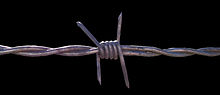
Wednesday  5th January 1916: The adjutant of the 7th Battalion, in the front line near Fricourt on the Somme, tells us that a patrol was sent out last night to investigate a German sap and a specimen of their barbed wire was brought in as it is always useful to know if the enemy have developed any better strength or design of wire so that it can be copied or countered. Yesterday afternoon the enemy fired several whizz-bangs and rifle grenades. The Battalion replied with ten rifle grenades and twelve trench mortar bombs on a spot where wood was seen to fly into the air. All enemy activity the ceased.

Source: X550/8/1

Thursday, 24 December 2015

Christmas is Coming


Friday 24th December 1915: As the second Christmas of this war approaches there seems to be no letting up in the killing. We have heard this morning from the adjutant of the 7th Battalion who are still near Fricourt on the Somme.

During yesterday afternoon Battalion snipers shot two men, this making five men shot at the same point in the last few days. One can only conclude that whatever work is being carried on there appears to be important. At 2.15pm the fired three of a new type of ball bomb from the West Gun to which enemy replied with rifle grenades.

The Bedfordshire Yeomanry intend having a very good Christmas. A member of Number 4 Troop told us the programme for a concert they are preparing for tomorrow night: “Under Royal Patronage, No 4 Troop, Saturday December 25th, 1915, for one night only. Starring Engagement of Sporty’s Orchestra and Concert Company under the able baton of Sporty himself. President, Sergeant Sale, Hinxworth; Vice-President Boko White. Artistes: Spirella Joe, the Canary from Highover; Chater (alias Tubby) the Mouth Organ Fiend; Ingums, the Man of Words, not Deeds; Bombagee, who will rattle his bones; Thameo, the Violin Comb Merchant; Marrashell, the Shoeing Smith, who will play the ‘cello comb; Gunpowder, Eccentric Comedian; Jerra, if not on guard, will sing songs of his own composing; the Woburn Trooper in sensational descriptions of Advance Guards and last, but not least, Jinky Jenks, the Man of Snores, who will pay £50 to any person if he or she can excel him in the noble art”.

“Owing to leave we are unable to star Robin, the bird with the voice of a gramophone”.

“Price of Admission: first two beds 5/-; near Beds 2/6, standing 6d. Seats may be booked and plan of room seen at the Stotfold Pork Butcher’s. Doors open 7.30; commence at 8. During the performance Bulmer will have a “luke” round”.

“Notice - The Management reserve the right of admission. No seats guaranteed, only by booking. Commissioned Officers are requested to come in dress uniform. Persons misbehaving themselves will be instantly expelled. Come in thousands! Nothing to suggest vulgarity!”(1)

Source: X550/8/1

(1) Much of the humour, of course is very dated and relies on references to in-jokes. The report has been edited as it contains some casual racism, something else which dates the piece.

Monday, 7 December 2015

Flying Wheels


British heavy trench mortar at IWM Duxford 

Tuesday 7th December 1915: the adjutant of the 7th Battalion, Bedfordshire Regiment, still near Fricourt on the Somme reports from the front line with some satisfaction that they bombarded their foe with trench mortars yesterday and obviously hit some sort of supply wagon as they saw two wheels flying into the air.

An enemy machine gun emplacement at the same spot was targeted by artillery later yesterday afternoon and has not fired since. Of course, the Battalion does not know whether this is because the gun was destroyed or because the Germans have moved it owing to the shell fire.

Last night.a patrol carried out a long reconnaissance of the ground in front of the enemy lines and managed to bring in a sample of the enemy’s barbed wire. They discovered that the Germans have fixed a rifle to the parapet at one point which they fire remotely, probably to give an idea that the trench is well-manned when, in fact, it is not. This raises the question as to why they simply do not swarm over and take such a thinly manned trench. The reason is that experience has shown that the Germans will make strenuous counterattacks to regain lost ground and do so quickly, so such an attempt would be sure to bring large numbers of casualties to our men and run the risk of the Battalion getting cut off if the units on either side did not also attack and this would require a large scale operation which takes long and meticulous planning if it is to be effective. Perhaps we will see such a large scale attack in the Somme area at some time in the next year.

Source: X550/8/1

Wednesday, 25 November 2015

A Lively Time

 Ball Grenade

Thursday 25th November 1915: The 1st Battalion, Bedfordshire Regiment, have been in the front line near Fricourt, on the Somme, since 21st of this month. Usually things are quite quiet but this tour of the trenches has been more lively. The adjutant told us: “The enemy shelled trenches more or less in enfilade(1) from the right front on most days, but did little material damage and caused no casualties. Officers' patrols went out on various occasions at night and examined the enemy's wire entanglements and threw bombs into their trenches, they also succeeded in dropping a number of grenades into their lines with catapults and 'West' bomb throwers(2).

Source: X550/2/5


(1) That is from the flank, the line must have made a turn at this point.


(2) West Guns were small spring fired ballistas invented in 1915 by Captain Allen West. They were more cumbersome than the catapult and operators, including West Himself, could lose fingers in the mechanism. It was replaced by mortars such as the Stokes Mortar in 1916.

Saturday, 14 November 2015

Mudbags


Sunday 14th November 1915: The adjutant of the 1st Battalion tells us that memories of the atrocious conditions at the front last winter have been rekindled. The Battalion are in the front line on the Somme, near the village of Fricourt and the weather is bad. Landslides occur in the trenches due to the incessant rain and the parapets and trench walls collapse.

It has been found unsatisfactory to use sandbags to make revetments to shore up the trenches because the foundations subside causing the whole revetment to collapse which, of course, is dangerous for any man beneath it. Needless to say sandbags made on the spot should actually be called mudbags, they are slimy and slippery.

Source: X550/2/5

Wednesday, 14 October 2015

Germans Firing French Bullets


Thursday 14th October 1915: The adjutant of the 7th Battalion, Bedfordshire Regiment, Captain P R Meautys reports from the front line near Fricourt that they have been using large catapults to shoot bombs into the German trenches opposite. In observing the fire of British artillery on German trenches Captain Meautys told us: “One shell appeared to hit direct on emplacements, but ricocheted; this also happened in the case of two others which apparently hit the same spot. Can it be that the Germans dig a lot of loose earth round their emplacements to prevent shells from bursting?”

Curiously Captain Meautys records: “A French bullet was fired into our lines today from the enemy”. Perhaps the Germans are short of ammunition and have resorted to using captured French rifles and bullets or perhaps French made weapons are considered superior to theirs?

Source: X550/8/1

Monday, 12 October 2015

German Trench Mortars

 German 76 mm trench mortar at IWM Duxford

Tuesday 12th October 1915: The Germans call their trench mortars minenwerfers, or mine launchers. They are known unaffectionately as Minnies by our men. The adjutant of the 7th Battalion, Bedfordshire Regiment, in the front line near Fricourt on the Somme tells us that the day before yesterday a Minnie was used to shell the 11th Battalion, Royal Fusiliers in a neighbouring trench.

Yesterday this Minnie was reported on as firing from a range of about 700 yards. The shells could be distinctly seen in the air and exploded by a time fuse as two burst in mid-air while others buried themselves for some time before exploding. The position was logged and British artillery searched this spot with high explosive and no more firing was experienced from it.

Source: X550/8/1

Saturday, 19 September 2015

Different Shifts


Sunday 19th September 1915: The adjutant of the 7th Bedfords, Captain Meautys, has sent us another tactical report. Just before dusk yesterday there was the usual desultory artillery fire. Rapid rifle fire opened on at 6.45pm and at about same time the enemy fired four small rifle grenades from a trench in front of Fricourt. No damage was done and we replied with rifle fire(1).

It seems that the enemy work in two reliefs, or shifts, one of which snipe more and are more active than the other. A red flash occurred away on the Battalion’s left just after midnight – cause unknown.

Source: X550/8/1


(1) Both sides tended to shoot at one another at dawn and dusk. These were known as the morning and evening “hates” and seem to have been done to remind the men they were at war rather than letting them settle into too comfortable routine.

Wednesday, 16 September 2015

More Reports from Patrols


Thursday 16th September 1915: Captain Meautys, adjutant of the 7th Bedfords, tells us in his morning tactical report that two shells were fired into a nearby redoubt yesterday. These shells were amalgamated with phosphorous and a sample was forwarded to headquarters for analysis in case some new devilry is being planned.

A red rocket was sent up from Fricourt at 9.15 pm and a cart was seen over to be ablaze behind the enemy's lines, it is amusing to think that this was was probably due to the flare. At 10.30pm a mine was exploded, this was followed by a little rapid fire from the enemy. Our guns replied with a salvo of shrapnel & High Explosive.

A patrol returned at 1.30 and reported they had got right up to the German lines and heard voices and sound of rifles being loaded. They are of opinion that the trench in front of Fricourt is strongly held, a contrast to other areas of the front line. On the right of the Bedfords’ line the men report an unusual quietness in the enemy and report that line to be very lightly held. There is no sniping from this part of line and only occasional machine-gun fire.

Sources: X550/3/wd

Saturday, 12 September 2015

A Third Snapshot of Trench Life


Sunday 12th September 1915: Captain Meautys of the 7th Battalion has just given us his morning tactical report. At 9.45 last night the sound of heavy German transport was heard on the road from Contalmaison to Fricourt. Our guns were informed.

At around the same time the sound of a train was heard, as usual, behind Fricourt. Patrols were sent out in front of the Battalion’s trenches and on right and left but returned having nothing to report. Under cover of darkness the Battalion mended the wire in front of its trenches.

A patrol at 6.45 this morning has just reported new posts of the enemy being made at the junction of two roads behind their front line. This was successfully bombed with rifle grenades much to the annoyance of the enemy who opened a hot fire without doing any damage. On our right enemy considerably quieter. This change suggests new regiment. Large explosion heard some distance on our right front between 3 & 3.30pm. Several rounds by big guns fired in same direction.

Source: X550/8/1

Tuesday, 8 September 2015

More News from the 7th Bedfords


Wednesday 8th September 1915: The adjutant of the 7th Battalion, Bedfordshire Regiment is Captain Paul Raymond Meautys(1). He updated us this morning about what happened to his unit yesterday as it mans the front line near the village of Fricourt north of the River Somme and suggested that we might like to print some of these snapshots or daily life in the trenches, to which we have agreed(2).

Yesterday morning the weather was fine and warm, about 11 am the Germans fired two rounds High Explosive which fell near a redoubt close by. Our guns replied with three rounds of shell. Three men reported wounded.

At 10pm the 11th Battalion, Royal Fusiliers blew up a mine. This was followed by rapid rifle fire and by machine gun fire. The Royal Fusiliers occupied the lip of the crater they had created(3). The Bedfords suffered one killed and one wounded.

Source: X550/8/1


(1) Sadly he would be killed on 16th June 1917 when serving with 2nd Battalion, South Staffordshire Regiment; he was 26 years old and lies buried in London Cemetery, Neuville-Vitasse near Arras.

(2) Robert Graves gives a vivid description of front line life in precisely this spot in his book Goodbye to All That. He was an officer in 1st Battalion, Royal Welch Fusiliers in 7th Division (the same division as 2nd Battalion, Bedfordshire Regiment)

(3) The Somme was chalk downland which was easy to mine.

Sunday, 2 August 2015

1st Battalion on the Somme, 7th Battalion on Parade


Monday 2nd August : We hear from the adjutant of the 1st Bedfords that they have moved to the area of the town of Albert, just north of the River Somme, where the British Expeditionary Force, with new divisions swelling its ranks, is taking over a substantial portion of the line from the French. This will mean that the British armies in Belgium and France will hold the whole of the front line from Ypres to the Somme

The Battalion will relieve the 410th French Regiment in trenches near the village of Fricourt, east of Albert during the night. This is deemed a quiet sector with little likelihood of serious fighting(1)

The 7th Battalion will march to Val-des-Maisons today to be inspected by General Officer Commanding 3rd Army, Lieutenant-General Sir Charles Monro, at 2.30pm. He tells us that it is raining heavily.

Sources: X550/2/5; X550/8/1


(1) Fricourt would be the scene of fierce fighting on 1st July 1916, first day of the Battle of the Somme.